Your Moroccan Berber rug is more than a floor covering — it’s a handwoven artifact that took an artisan weeks or months to create. With proper care, these rugs last generations. This guide covers every stage of rug ownership, from the day it arrives to long-term preservation.
For a deep-dive into cleaning techniques and stain removal, see our Ultimate Rug Care & Maintenance Guide.
Daily & Weekly Care
The single most important thing you can do for your rug is consistent, gentle maintenance. Dirt and grit that settle deep into the wool act like microscopic sandpaper, slowly cutting fibers from the inside.
Vacuuming the Right Way
- Frequency: Weekly in high-traffic rooms, every two weeks in bedrooms.
- Setting: Suction-only — never use a beater bar or rotating brush, which can pull hand-knotted fibers loose.
- Direction: Always vacuum in the direction of the pile, not against it.
- Edges & fringe: Use a soft brush attachment on fringed edges to avoid tangling.
The Quick Shake
For smaller rugs, take them outside once a month and shake them vigorously. This releases deep grit that vacuums miss — a technique Berber tribes have used in the Atlas Mountains for centuries.
Spill & Stain Emergencies
Wool is naturally hydrophobic thanks to its lanolin coating, which gives you a short window to act before a spill becomes permanent.
The 3-Step Blotting Rule
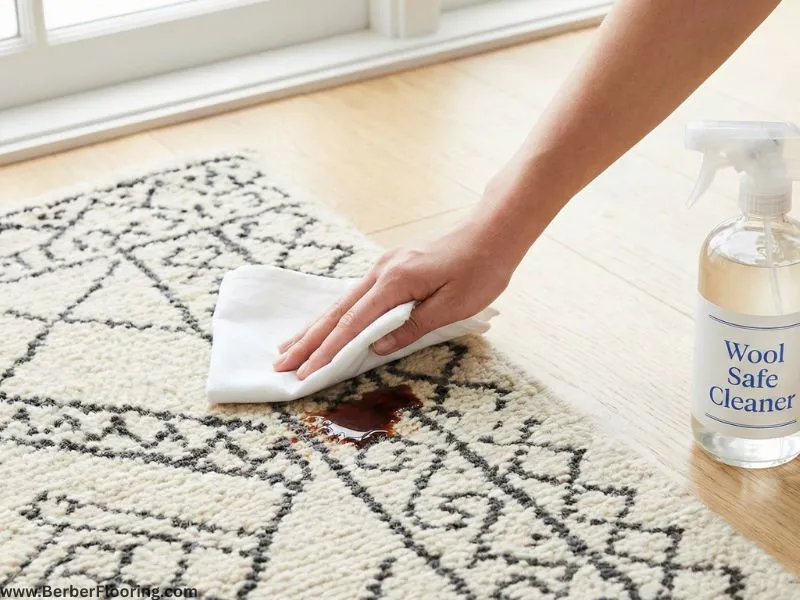
- Blot immediately with a clean, dry white cloth — never use colored towels that could transfer dye.
- Never rub or scrub — this pushes liquid deeper and distorts the fiber twist.
- Rinse with lukewarm water if needed, then blot dry again.
What to Avoid
| ❌ Never Use | Why |
|---|---|
| Bleach or ammonia | Strips lanolin, makes wool brittle |
| Hot water | Can shrink wool and cause dye bleeding |
| Steam cleaners | Warps the rug’s foundation weave |
| Rotating brush machines | Pulls hand-knotted fibers loose |
When Water Isn’t Enough
For stubborn stains, use a pH-neutral wool detergent (such as Eucalan or a dedicated wool wash). Apply a tiny amount to the cloth — not directly onto the rug — and blot gently. Always test on an inconspicuous corner first.
New Rug: What to Expect
Shedding Is Normal
New handwoven wool rugs shed loose fibers for the first 3–6 months. This is not a defect — it’s a hallmark of authentic hand-spun wool. Gentle, regular vacuuming will resolve it naturally.
Sprouting
Occasionally, a single strand of wool will rise above the pile height. Never pull it — simply trim it level with sharp scissors.
Initial Odor
New wool rugs may carry a faint natural lanolin scent. This dissipates within 1–2 weeks with normal airflow. Avoid using chemical air fresheners near the rug.
Seasonal & Long-Term Care
Rotate Your Rug
Rotate your rug 180 degrees every 3–6 months to ensure even wear and consistent sun-fading across the surface.
Sun Exposure
Prolonged direct sunlight can fade vegetable-dyed wool over time. If your rug sits in a sunny spot, use curtains or UV-filtering window film during peak hours.
Rug Pads
Always use a quality rug pad underneath. A good pad:
- Prevents slipping and bunching
- Reduces fiber friction against hard floors
- Adds cushioning and extends rug life
- Allows airflow underneath to prevent moisture buildup
Choose a felt or natural rubber pad — avoid synthetic adhesive pads that can discolor wood floors.
Professional Cleaning
We recommend a professional submersion wash every 3–5 years, depending on traffic and use.
Why Not Steam Cleaning?
Most commercial carpet cleaners use hot water extraction. This works for synthetic carpets but can be harmful to handwoven wool:
- High heat shrinks the wool
- Excess moisture can warp the foundation
- Harsh chemicals strip the natural lanolin
What to Look For
Choose a specialist who offers cool-water submersion cleaning — the rug is gently agitated in a wash pool, rinsed thoroughly, and laid flat to dry. This method removes 100% of embedded grit and re-hydrates the wool fibers, restoring their natural luster.
Storage
If you need to store your rug for an extended period:
- Clean it first — never store a dirty rug, as grit and stains set permanently over time.
- Roll, don’t fold — fold creases can become permanent. Roll the rug around a clean, acid-free cardboard tube with the pile facing inward.
- Wrap in breathable fabric — use a cotton sheet, never plastic. Plastic traps moisture and promotes mold and moth damage.
- Store in a cool, dry place — avoid basements, attics, and garages where humidity and temperature fluctuate.
- Add cedar or lavender sachets — natural moth deterrents that won’t damage wool fibers.
Quick Reference
| Task | Frequency |
|---|---|
| Vacuum (suction only) | Weekly |
| Shake out small rugs | Monthly |
| Rotate 180° | Every 3–6 months |
| Spot clean spills | Immediately |
| Professional submersion wash | Every 3–5 years |
| Check rug pad condition | Annually |